|
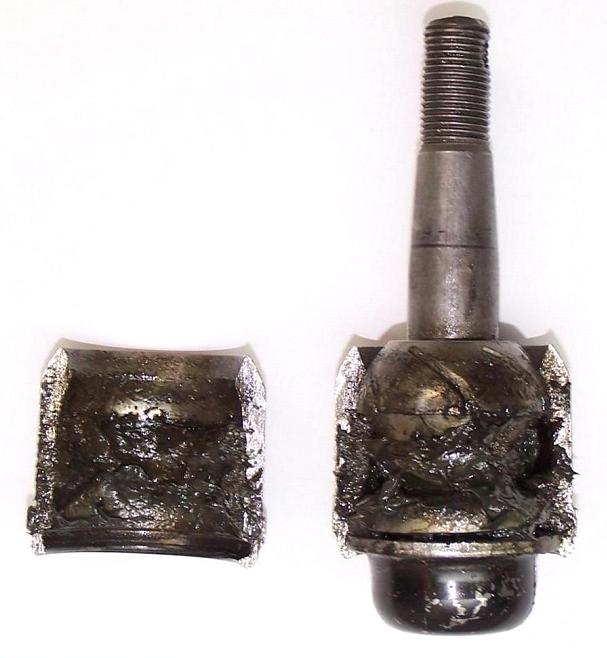
These are some forensic photos of an OEM style ball joint removed from a car. While they were only removed to install the new R/T Super Joints, prior to this the owner did not foresee any reason why to remove them otherwise. However, once they were removed judging from their stiffness, the owner could not imagine how they could even function as they were. The ball joint and it was essentially "frozen" stiff. You could not move it by hand. You could barely nudge it a fraction of an inch with a hammer in a vice. And you could not twist it.
One thought was it may have rusted from sitting all winter. Another theory was that something ground up inside, perhaps a piece broke and wedged inside, or something catastrophic must have occurred to explain the reason why it was no longer satisfactorily operable. What we discovered, was something no one could have ever envisioned in a million years.
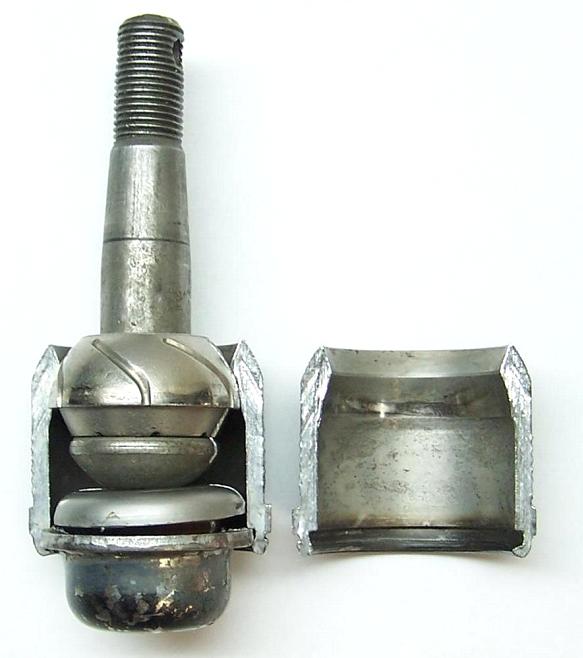
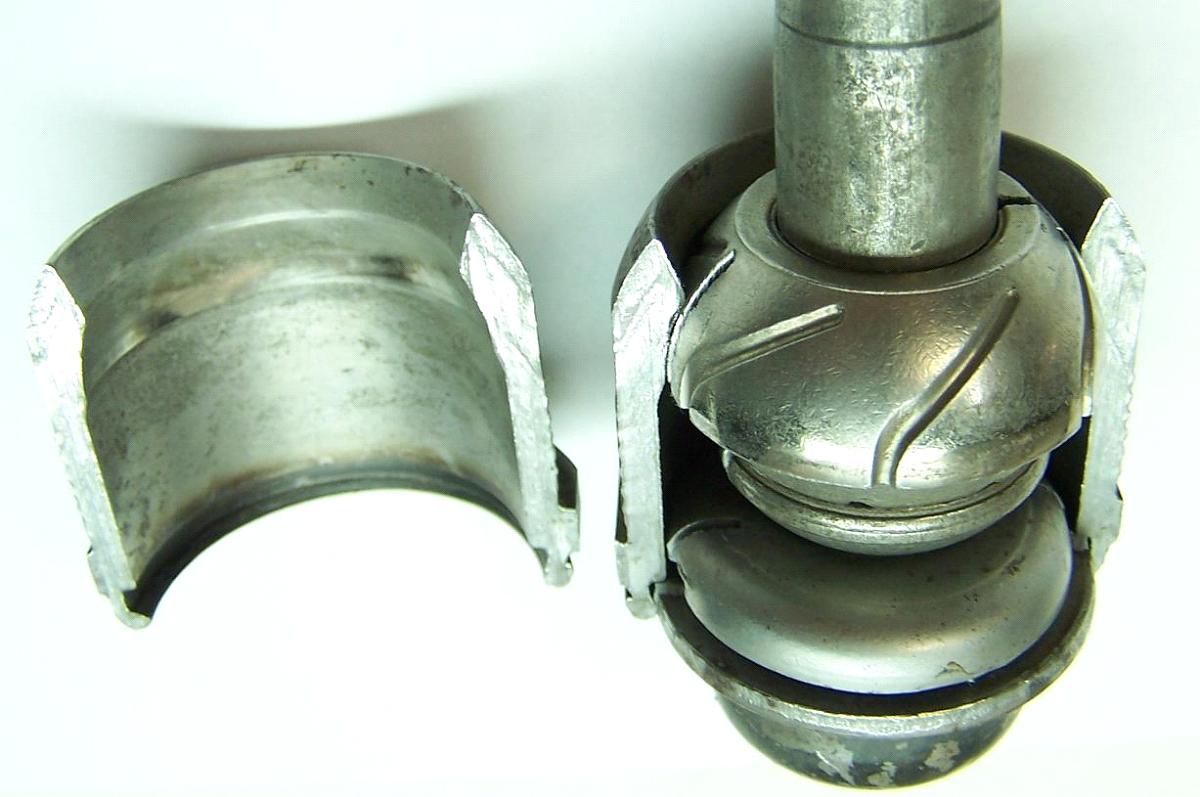
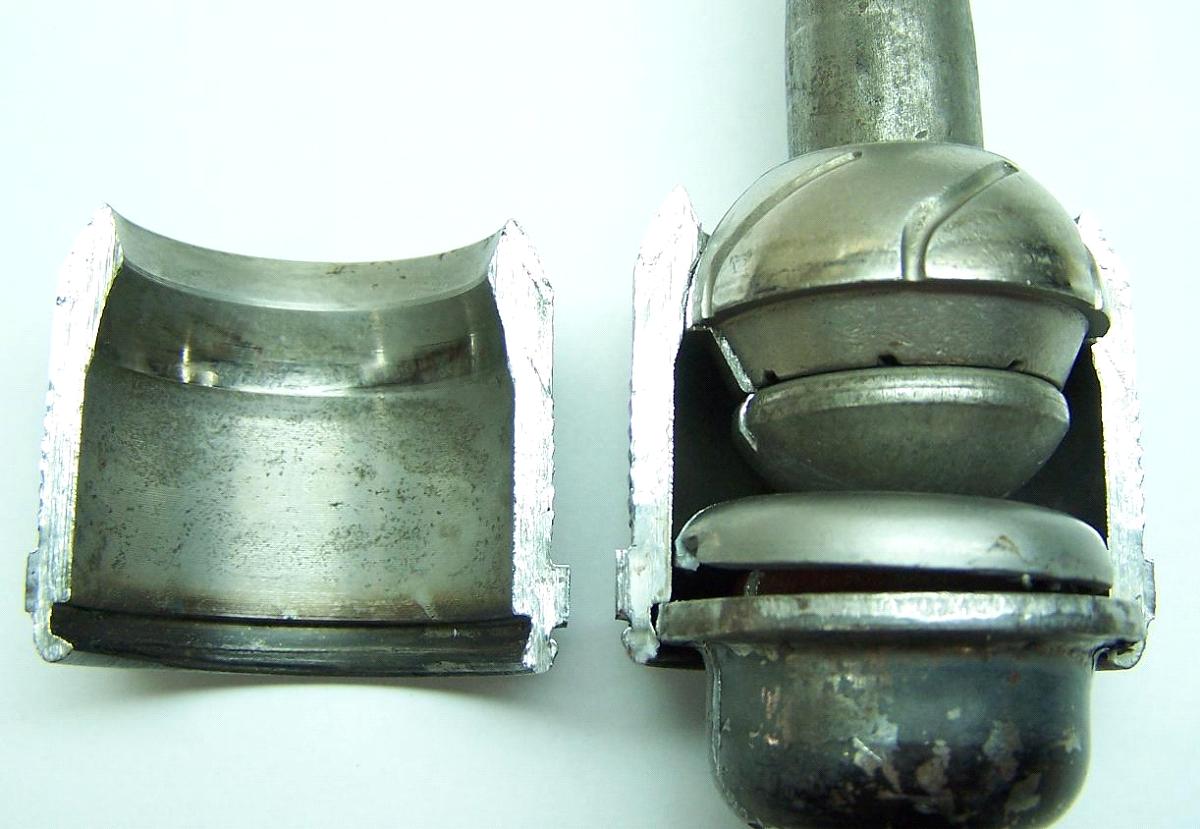
We c-a-r-e-f-u-l-l-y sawed the hardened joint body in half to section it and see what was going on inside. This was evidence was preserved with a meticulous process. What was found inside, was shocking. There was NOTHING wrong with the joint. It was not rusted. It was not ground up. It was not wedged with a broken component. Nothing! It was fully greased and not even WORN much. While some might have wondered why it didn't work... after this forensic study, one can not figure out how it ever could have worked in the first place. Keep in mind, this is a typical ball joint that most daily drivers have in them on the road today. The ball joints below were not polished, wire brushed or chemically cleaned. Just the grease was wiped off, that's it.
The problem was, the common design of the OEM ball joints are just not CAPABLE of the smooth movement you EXPECT, and what these lightweight cars NEED.
|
|